How to Ship Nitric Acid from China: Classification and Shipping Costs
Shipping nitric acid from China requires an approved dangerous goods plan based on the acid concentration, whether the product is red fuming, the packaging format, shipment weight and destination. Commercial quantities usually move by sea.
Importers should first confirm the transport classification. The next decision is whether the cargo fits a packaged full container load (FCL), an ISO tank movement, dangerous goods less than container load (DG LCL), or a permitted cargo aircraft service. The carrier must approve the classification, packaging and route before collection.
Nitric Acid Shipping at a Glance
Transport classification: Most non-red-fuming nitric acid ships under UN 2031. Red fuming nitric acid falls under UN 2032 and faces stricter transport restrictions.
Packaged commercial shipments: A full container load (FCL) in a 20ft general purpose container is normally the first option to assess because nitric acid often reaches payload limits before container volume limits.
Bulk shipments: A 20ft ISO tank can suit large or repeat volumes when the loading facility, receiving facility and allocated tank are compatible with the product.
Small shipments: Dangerous goods less than container load (DG LCL) depends on warehouse, consolidator, segregation and carrier approval for the actual sailing.
Air freight: Only certain concentrations and package quantities can move on cargo aircraft. Red fuming nitric acid is forbidden by air.
China pickup: Carrier approval, suitable dangerous goods trucking and the supplier's release requirements must all be confirmed before collection.
Nitric Acid Transport Classification
Nitric acid is regulated as dangerous goods for international transport. Most non-red-fuming nitric acid moves under UN 2031 as a Class 8 corrosive substance. Higher concentrations also carry a Class 5.1 subsidiary risk because nitric acid acts as an oxidiser.
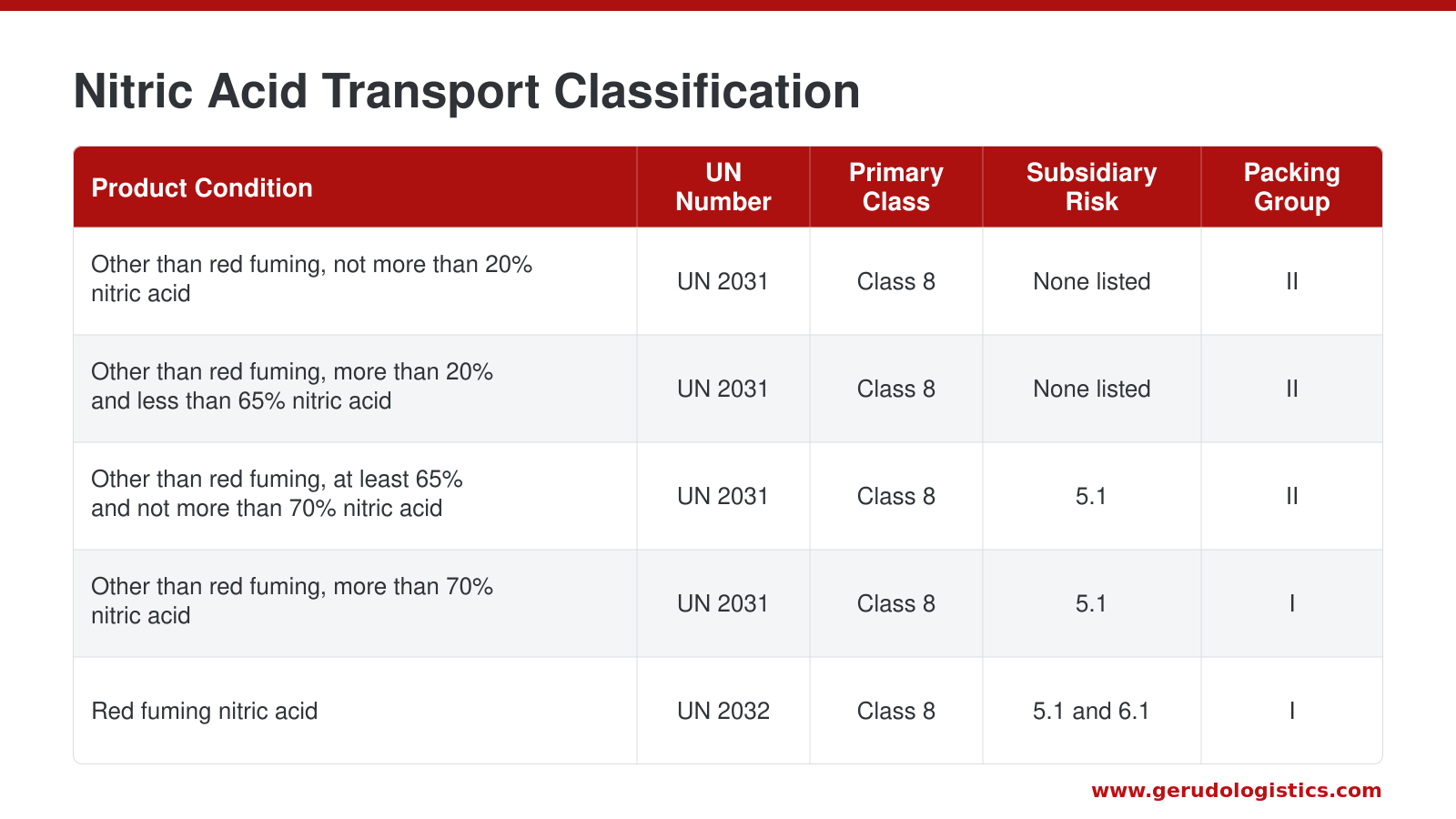
A 68% non-red-fuming product normally falls under UN 2031, Class 8 with a 5.1 subsidiary risk, Packing Group II. The current Safety Data Sheet (SDS), full composition and transport appraisal need to support that entry.
UN 2032 applies to red fuming nitric acid. Concentration alone does not establish this proper shipping name. The product description and composition must identify the material as red fuming nitric acid.
UN 1796 applies to nitrating acid mixtures. Importers should not use this entry as an alternative classification for diluted nitric acid. The 49 CFR Hazardous Materials Table provides a public cross-check for the concentration bands, UN entries, subsidiary risks and Packing Groups.
Shipping Method for Nitric Acid from China: Sea vs Air
FCL Shipping for Packaged Nitric Acid
FCL sea freight is normally the first option assessed for packaged commercial quantities. A dedicated container avoids sharing space with unrelated LCL cargo and gives the shipper direct control over the load plan.
A 20ft general purpose container is usually the practical starting point for dense liquid cargo. Nitric acid often reaches container payload or road weight limits before the cargo needs the cubic capacity of a 40ft container.
The FCL plan requires four confirmed inputs:
Approved packaging: The permitted package type, UN performance level, capacity and chemical compatibility must cover the actual product.
Container payload: The total packed weight must remain within the payload of the allocated container.
Road weight limit: The loaded container must comply with the road limits that apply to origin pickup and destination delivery.
Carrier approval: The accepted booking must match the UN entry, package count, gross weight, origin port, destination port and sailing.
Some nitric acid entries permit intermediate bulk containers (IBCs) under specified conditions. The applicable packing instruction must permit the IBC type, and the construction materials, lining and closures must remain compatible with the complete formulation.
A previous approval does not automatically cover a different concentration, package configuration, vessel, origin port or destination.
ISO Tank Shipping for Bulk Nitric Acid
A 20ft ISO tank can suit large volumes or repeat movements. Both the loading facility and receiving facility must be able to handle the selected tank and the actual nitric acid grade.
The tank review covers the applicable portable tank instruction, tank materials, lining where relevant, valves, pressure settings, inspection status and filling conditions. A valid inspection record confirms the tank's inspection status; chemical compatibility still requires a product-specific check.
The commercial comparison with packaged FCL should include:
Tank positioning: Delivery of a suitable empty tank to the loading location.
Previous cargo and cleaning: Evidence that the tank condition is acceptable for nitric acid loading.
Loading and discharge: Facility access, hose connections, pumping arrangements and operating time.
Free time: The allowed period for loading, terminal handling, discharge and return.
Empty return: The agreed depot, return deadline, cleaning requirement and repositioning cost.
ISO tank shipments use tank records and bulk transport requirements. Certificates prepared for drums or IBCs do not replace the ISO tank file.
DG LCL for Small Nitric Acid Shipments
DG LCL can suit small commercial quantities that do not justify a dedicated container. Availability depends on the exact cargo and consolidation plan rather than a general promise that Class 8 cargo is accepted.
Four approvals need to align:
Warehouse approval: The receiving warehouse accepts the classification, packaging, documents and delivery timing.
Consolidator approval: The consolidator confirms that the shipment can enter the planned service.
Segregation approval: The nitric acid can share the container with the other accepted dangerous goods.
Ocean carrier approval: The carrier accepts the complete consolidated load for the selected sailing.
A change to another shipper's cargo can alter the segregation plan and remove an earlier LCL option. Importers should therefore confirm the actual consolidation service before arranging factory release.
Air Freight Limits for Nitric Acid Shipping from China
Air freight depends on the UN entry, concentration and quantity per package. The applicable dangerous goods rules set the legal package limits, while the airline and handling agent decide whether to accept the shipment on the proposed route.
The current 49 CFR Hazardous Materials Table lists the following air limits for comparison:
Not more than 20% nitric acid under UN 2031: Up to 1 L per package on passenger aircraft and 30 L per package on cargo aircraft.
More than 20% and less than 65% under UN 2031: Forbidden on passenger aircraft and limited to 30 L per package on cargo aircraft.
At least 65% and not more than 70% under UN 2031: Forbidden on passenger aircraft and limited to 30 L per package on cargo aircraft.
More than 70% under UN 2031: Forbidden on passenger aircraft and limited to 2.5 L per package on cargo aircraft.
Red fuming nitric acid under UN 2032: Forbidden on passenger and cargo aircraft.
The regulatory limit sets an outer boundary. Airport restrictions, airline variations and route-specific handling conditions can still prevent acceptance below that limit.
Nitric Acid Shipping Costs from China
An accurate nitric acid shipping cost cannot be calculated from a standard FCL index alone. The final rate depends on the UN entry, concentration, packaging, shipment weight, supplier location, container type, carrier acceptance and destination scope.
The following indicative August 2026 prices cover supplier-to-port transport for one carrier-approved FCL shipment of packaged nitric acid from the Shanghai area.
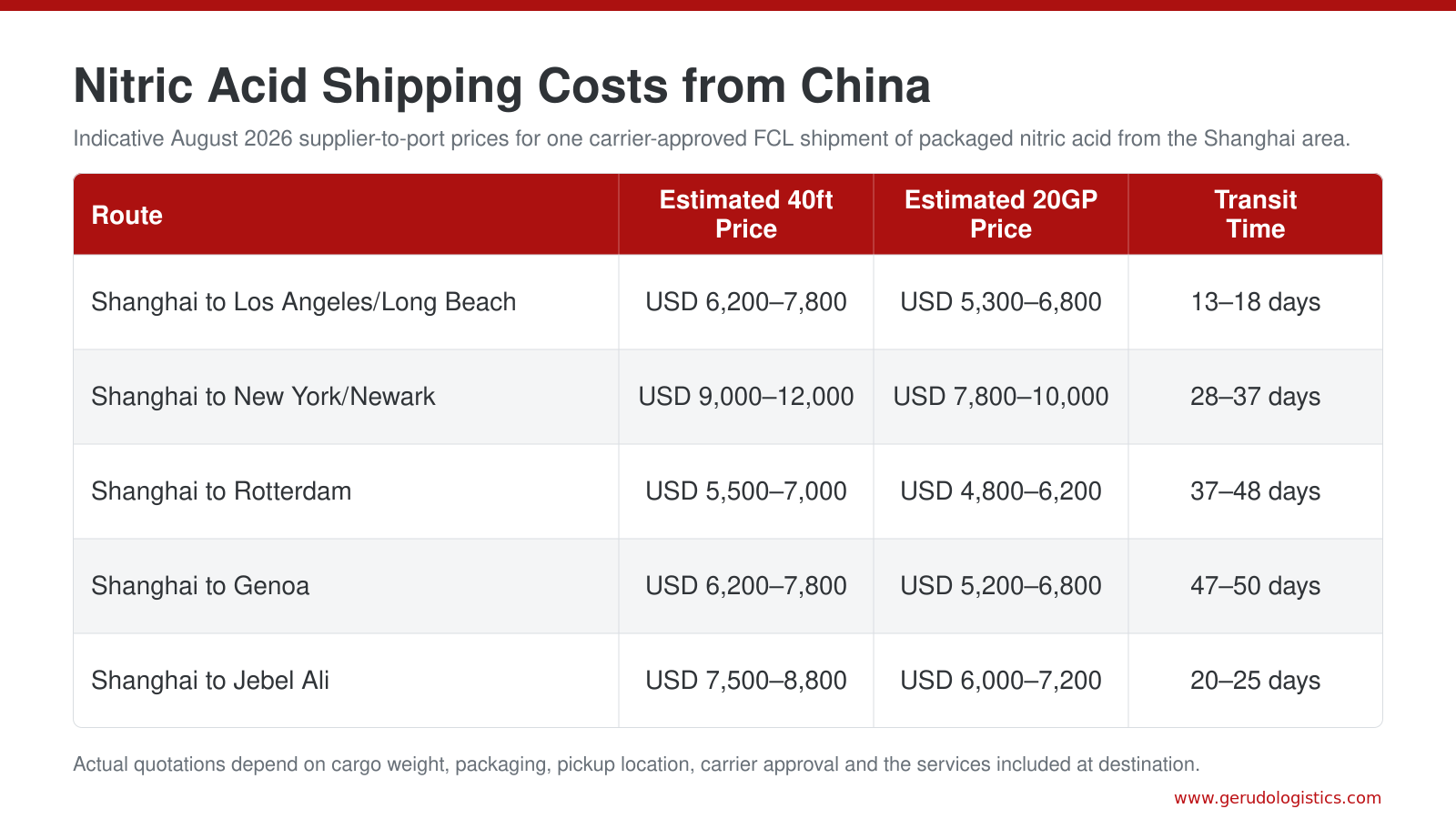
For packaged nitric acid, the 20GP rate should normally be assessed first. Nitric acid is dense, so a 40HQ can reach container payload or road weight limits before its cubic capacity is used. A 40HQ quote is only commercially meaningful when the packed weight, container payload and road limits support the proposed load.
Nitric Acid Shipping Cost Breakdown
A shipping quote should identify the covered route and include the costs required to complete that scope:
China dangerous goods pickup: Collection from the supplier by an accepted road carrier.
Origin handling: Booking review, dangerous goods documentation, export customs declaration and terminal procedures.
International freight: Ocean freight or the accepted air freight service.
Carrier surcharges: Dangerous goods, fuel, security and route-specific surcharges in force for the booking.
Destination handling: Terminal charges and dangerous goods handling after arrival when the quote covers more than port-to-port transport.
Import clearance: Customs brokerage and required destination formalities when included in the service scope.
Final delivery: A suitable destination road carrier and the agreed delivery appointment for a door-to-door shipment.
Import duty, tax, inspection, storage, demurrage and costs caused by document or cargo changes should appear separately when applicable. A comparable quotation must also state the container type, validity period, free time and excluded charges.
Packaging Requirements for Nitric Acid
Nitric acid packaging must satisfy the packing instruction for the selected UN entry and transport mode. The package materials and closures also need to remain compatible with the actual concentration and every other ingredient in the product.
The packaging review covers five separate questions:
Permitted package: Does the packing instruction allow the drum, IBC or other package type and capacity?
Material compatibility: Are the container, lining, gaskets, closures and valves suitable for the complete formulation?
Performance level: Does the UN specification marking and tested performance level cover the required Packing Group?
Approved use: Do the packaging records cover the manufacturer, model, capacity, filling method, filling site and packed weight?
Current condition: Do package photographs show secure closures, correct marks and labels, and no visible damage, leakage or contamination?
A UN mark is only one part of the evidence. A packaging certificate for another drum model, capacity, manufacturer, filling site or product does not establish acceptance for the current shipment.Dangerous Goods Package Certificate from China explains how to compare the certificate with the finished packages.
The load plan must also address segregation. Nitric acid cannot be packed with incompatible organic materials, combustible substances, reducing agents or other cargo prohibited by the applicable segregation rules and the product SDS.
Carrier Approval and China Pickup for Nitric Acid
Carrier approval and China pickup are separate controls. Approval from an ocean carrier does not authorise an ordinary truck to collect regulated dangerous goods from the supplier.
The China-side booking and pickup process has five steps:
The supplier provides the cargo file: The forwarder receives the current SDS, product concentration, transport appraisal, packaging records, quantity and package photographs.
The freight forwarder checks the shipment: The review covers the classification, package format, shipment weight and viable container type.
The carrier reviews the booking: The carrier confirms whether the UN entry, packaging, weight and route are acceptable for the selected sailing.
The road carrier collects the cargo: A suitable dangerous goods vehicle moves the shipment to the approved warehouse, terminal or port facility.
The origin team completes the declaration: The final package count, weights, dangerous goods declaration and terminal cut-offs must match the accepted booking.
Dangerous Goods Trucking from a Chinese Factory to Port explains the separate roles of factory release, road carrier scope and warehouse or terminal approval.
Documents Required to Ship Nitric Acid from China
Every document must describe the same product and shipment. A correct SDS cannot compensate for packaging records that cover different drums or an invoice that states a conflicting product description.
The core file normally includes:
Current SDS: Identifies the product, concentration, composition, physical properties and Section 14 transport information.
Transport appraisal: Supports the classification of the actual product under the selected transport mode.
Dangerous Goods Declaration: States the proper shipping name, UN number, primary and subsidiary risks, Packing Group, packaging and quantity.
Packaging records: Support the performance level and approved use of the drums, IBCs or other permitted packages.
ISO tank records: Cover the allocated tank specification, inspections and product suitability for a bulk shipment.
Commercial invoice: Provides the commercial description, value, seller, buyer and agreed Incoterm for customs clearance.
Packing list: Records the package count, net weight, gross weight and shipment dimensions.
Package photographs: Show the finished packages, closures, marks, labels and visible condition.
Transport document: Records the accepted sea or air movement and the required dangerous goods information.
Product identity, concentration, UN entry, package count and weight must remain consistent across the file. A formula change, packaging substitution or revised shipment quantity requires another review.DG Shipping Documents from China explains the purpose of each record in the wider shipment file.
How Professional Freight Agent Handles Nitric Acid Shipments
Gerudo Logistics is a dangerous goods specialist freight forwarder based in China. We review the product classification, packaging, shipment volume, pickup location and destination before comparing FCL, ISO tank, DG LCL and any permitted air freight arrangement.
For an accepted shipment, our team can coordinate dangerous goods pickup in China, carrier approval, export declaration, international transport, customs clearance and final delivery. The final service plan depends on the actual nitric acid grade, package format and route approval.
To request a nitric acid shipping quote,contact Gerudo Logistics with the current SDS, nitric acid concentration, packaging details, package count, gross weight, pickup location and destination.
Frequently Asked Questions for Nitric Acid Shipment
Can a Previous Carrier Approval Cover Another Nitric Acid Shipment?
Only when the carrier confirms that the earlier approval still covers the same product, classification, packaging, quantity, route and sailing conditions. A repeat order does not automatically retain the previous acceptance.
Can Nitric Acid Share a Container with Other Chemicals?
Only after the warehouse, consolidator and carrier approve the complete cargo combination under the applicable segregation rules. Every accompanying chemical needs a confirmed classification, packaging format and quantity before the container plan can be accepted.
Does Every Destination Require a Nitric Acid Import Permit?
No single rule applies to every destination. Permit and registration requirements depend on the country, importer activity, nitric acid concentration, intended use and local chemical controls. The importer should complete the destination review for the actual transaction.
Can an Approved Booking Move to Another Vessel or Origin Port?
A vessel or origin-port change requires confirmation. The carrier service, terminal, transhipment points and dangerous goods acceptance can differ from the original booking.
Can an Ordinary Truck Deliver Nitric Acid after Arrival?
Destination delivery must follow the local road dangerous goods rules. The delivery quote should name a road carrier whose authorised scope covers the cargo and route to the receiving address.
Can Cargo Insurance Cover a Nitric Acid Shipment?
Coverage is possible when the insurer accepts the declared dangerous goods, packaging, route and insured value. The importer should check dangerous goods exclusions, deductibles and disclosure requirements before cargo release.