Why Frozen Shipments Get Held at Port and How to Prevent Delays
When a frozen food shipment reaches the destination port, importers usually expect the container to move from vessel discharge to customs release, cold storage, and final delivery. In practice, release may still be delayed even when the ocean freight stage has gone well.
For frozen food, a document issue can quickly become a cold-chain and cost issue. The cargo may still be frozen, but the importer may lose delivery slots, free days, sales time, and cost control. A few extra days can create reefer power, storage, inspection, cold delivery, and schedule change costs.
This article explains why frozen food shipments from China are held at the destination port, which product categories face higher delay risk, and what importers should check before booking a reefer container or refrigerated container.
Frozen Food Shipments Held at the Port at a Glance
A reefer shipment held at the destination port means the container has arrived, but the cargo has not been released for final delivery. The reason may involve customs review, food authority inspection, missing certificates, label problems, unclear product information, or cold-chain handover delays.
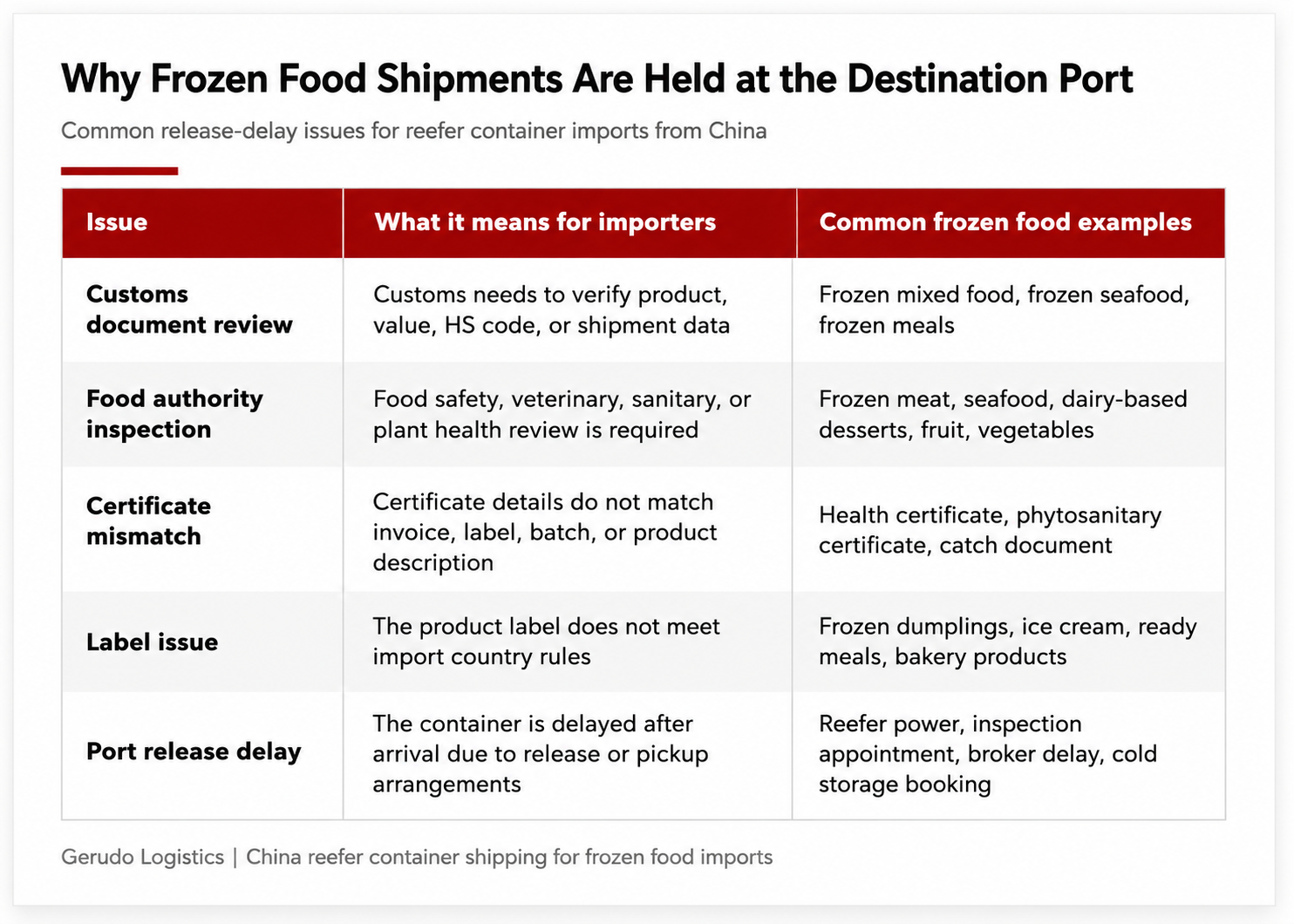
A port hold usually starts as a release issue. Cargo damage is a separate question that depends on temperature control, handling records, inspection results, and the final cargo condition.
For a wider explanation of reefer paperwork, read our article of reefer customs clearance.
What Does It Mean When a Frozen Shipment Is Held at the Port?
A frozen food shipment can be held because customs, food authorities, terminal operators, brokers, or cold-chain receivers still need to complete release requirements.
For importers, these delays may look similar because the cargo is simply unavailable for pickup. In practice, the cause matters. A customs data review, a sanitary inspection, a label question, and a cold storage appointment delay require different actions.
A port hold may involve several types of review or coordination:
Customs review of HS code, value, invoice, packing list, or bill of lading
Food authority review of health, sanitary, phytosanitary, or catch documents
Label review for local language, allergens, shelf life, origin, or importer details
Inspection appointment for physical checks, sampling, or laboratory testing
Terminal release, reefer plug-in, cold storage, or refrigerated truck coordination
The Main Reasons Frozen Food Shipments Are Not Released on Time
Most frozen food release delays come from missing, unclear, or inconsistent shipment information. The cargo may be real, safe, and properly frozen, but the documents may fail to prove exactly what the shipment contains.
1. Inaccurate Product Information
The first problem is often a vague product description. Terms such as “frozen food,” “frozen mixed products,” “frozen snacks,” or “frozen dumplings” may be too broad for port review.
Frozen food should be described by product type, main ingredient, processing method, and commercial use. A frozen vegetable dumpling, pork dumpling, shrimp dumpling, and mixed seafood dumpling may face different checks.
HS code classification can also become a problem if the code does not match the product. A frozen seafood fillet, seafood dumpling, cooked seafood meal, and breaded seafood snack should not be treated as the same product for declaration purposes.
2. Missing Food Certificates
Frozen food may require different certificates depending on product type and import country. Importers should not assume that one document set works for all frozen products.
Common documents may include:
Health certificate
Sanitary certificate
Phytosanitary certificate
Certificate of origin
Catch document for certain seafood
Halal certificate for relevant markets
Product specification sheet
Manufacturer or establishment declaration
Temperature and shelf-life information
A shipment can be held when a required certificate is missing. It can also be held when the certificate exists but does not describe the cargo clearly enough.
3. Document Mismatch
A small data mismatch can create a large delay at port. The importer should check whether the invoice, packing list, bill of lading, certificate, label, and product specification all describe the same cargo.
Common mismatch points include:
Product name
Batch number
Net weight
Gross weight
Carton quantity
Manufacturer name
Production date
Expiry date
Storage temperature
Consignee or importer details
In our experience, many avoidable release delays are visible before departure. The problem is that documents are often checked separately, so nobody compares the full set until the cargo has already arrived.
4. Label Problems
Labeling is a common reason for frozen food review. For imports from China, the product label should follow the import country’s food labeling rules.
Depending on the country and product, the label may need to show:
Local language product name
Ingredient list
Allergen statement
Nutrition facts
Shelf life
Storage temperature
Country of origin
Importer or distributor details
Halal or other certification marks where relevant
This matters most for retail-packed frozen food, ready meals, dumplings, bakery products, ice cream, and frozen snacks. A bulk seafood carton and a retail frozen meal have different label risk.
5. Mixed Ingredient Risk
Mixed-ingredient frozen food often creates more questions than single-ingredient products. A frozen ready meal may contain meat, seafood, dairy, egg, vegetables, sauce, seasoning, and allergens.
This makes frozen prepared foods more sensitive. A carton marked as “frozen snacks” may look simple, while the ingredient list may require food authority review.
6. Late Release Planning
Some delays happen after the documents are accepted. The container may still wait because inspection, cold storage, terminal release, or refrigerated delivery has not been arranged in time.
This is common when the importer focuses only on ocean freight. A frozen shipment also needs broker readiness, inspection coordination, reefer power, cold storage options, and delivery appointment planning.
Which Frozen Food Categories Face Higher Delay Risk?
Some frozen food categories are more likely to be held because the documents and product details are more sensitive. The risk is usually higher when the product contains animal-origin ingredients, mixed ingredients, retail labels, or market-specific certification.
Frozen seafood often faces closer review because authorities may check species name, origin, processing method, residue risk, catch document, and health certificate details. Seafood can also face sampling or laboratory testing in some markets.
Frozen meat and meat-containing foodcan be sensitive because import countries may control which establishments, meat types, and processing conditions are accepted. Meat dumplings, meat buns, frozen meals, and prepared food with animal-origin ingredients should be reviewed before booking.
Frozen prepared foodsoften create delay risk because the product description is easy to oversimplify. A carton marked as “frozen snacks” may contain meat, seafood, egg, dairy, wheat, soy, or several allergens.
Frozen fruit and vegetables may seem lower risk, but they can still require plant-health documents, pesticide residue control, processing information, or origin details. IQF fruit, mixed berries, frozen sweet corn, and frozen vegetable blends should not be treated as identical products.
Frozen bakery, desserts, and ice cream may face review because of dairy, egg, retail labels, shelf life, and storage requirements. These products are also more exposed to commercial quality disputes if a port delay reduces the sales window. For related product planning, see our guide in frozen bakery and ice cream shipping.
The category itself does not decide everything. The final risk depends on product formula, local rules, certificate accuracy, importer readiness, and coordination between supplier, freight forwarder, broker, and cold-chain receiver.
What Happens When a Reefer Shipment Is Held at the Port?
A frozen shipment held at the destination port can create several consequences at the same time. The importer may be dealing with release uncertainty, reefer power, inspection handling, shelf-life pressure, and possible claim risk.
1. Extra Reefer Power Cost
When a refrigerated container is held before release, it still needs power to maintain the frozen cargo temperature. This is one of the first cost differences between frozen cargo and dry cargo.
A reefer container waiting at the terminal, inspection area, or cold storage facility needs plug-in access and proper handover. If the delay continues, power-related charges may keep increasing until the container is released or moved.
2. Free Time Pressure
Importers usually have limited free time for demurrage and detention. If release takes longer than expected, daily charges may start before the cargo reaches the importer’s warehouse.
This is why a port hold can affect the landed cost even when the ocean freight was booked correctly. Extra days at port can create reefer power, storage, inspection, and equipment-use costs.
3. Inspection Handling Risk
Some holds can be resolved through document review. Others may require physical inspection, sampling, laboratory testing, or movement to a cold storage facility.
Each extra handling step adds time and coordination risk. For frozen food, the importer should confirm who controls the cargo, where the container is located, and whether the cold chain is protected during inspection.
4. Shelf-Life Pressure
A delayed frozen shipment may still be safe if the temperature remains stable. The commercial problem is remaining shelf life.
This matters for retail promotions, restaurant supply, seasonal goods, private-label programs, and products with shorter sales windows. A shipment that arrives late may still be usable, but the importer has less time to distribute and sell it.
5. Quality Dispute Exposure
If the cargo later shows quality problems, the importer may need records showing what happened during the hold. Useful records include terminal notices, broker messages, inspection instructions, plug-in confirmation, temperature records, and delivery time stamps.
If the shipment has suffered temperature deviation, visible cargo damage, rejection, or disposal, the next step may involve a claims procedure.
How Importers Can Prevent Frozen Food Release Delays Before Booking
The best time to reduce release delay risk is before the reefer container is booked. Once the vessel has arrived, the importer has fewer options and less time.
1. Import Requirement Check
Before booking, the importer should confirm whether the product can enter the import country. This is especially important for frozen meat, seafood, dairy-based desserts, prepared meals, and products with animal-origin or mixed ingredients.
Europe importers should pay attention to Border Control Post procedures, TRACES, and CHED where relevant.
US importers should review FDA and CBP requirements before shipment.
2. Product File Preparation
The importer should ask the supplier for a full product file before booking. This allows the broker and forwarder to review the shipment before the container is already on the water.
A useful product file should include:
Product name
Ingredient list
HS code proposal
Processing method
Storage temperature
Shelf life
Net weight and gross weight
Carton size and packing format
Manufacturer name and address
Batch or lot information
Label artwork or label draft
Required certificates for the import country
This is especially important for mixed frozen food, ready meals, retail-packed food, and products with animal-origin ingredients.
3. Broker Pre-Review
The import broker should review the product before the container leaves China. The broker usually understands local release practice, food authority requirements, and the port process better than the supplier.
This review should happen before booking. Certificate changes, label corrections, and HS code questions are easier to solve before the cargo is loaded.
4. Document Consistency Check
Document consistency should be checked before the shipment starts. The invoice, packing list, bill of lading, certificate, label, and product specification should describe the same cargo.
The importer should compare the product name, weight, carton count, manufacturer, batch, production date, expiry date, and temperature requirement. These are simple checks, but they prevent many avoidable delays.
5. Label Review
Labels should be prepared according to the import country’s food rules. This may involve local language, allergen declaration, nutrition facts, country of origin, storage instructions, shelf life, importer details, or certification marks.
The right label format depends on the market and product type. Retail frozen meals, ice cream, bakery products, and frozen snacks usually need closer label review than bulk raw materials.
6. Cold-Chain Handover Plan
The importer should plan the cold-chain handover before the vessel arrives. A reefer shipment may need a customs broker, inspection slot, cold storage appointment, refrigerated truck, and receiver availability.
If these arrangements are made late, the cargo may be released on paper but still delayed in practical delivery. That delay can still create cost and shelf-life pressure.
What Importers Should Do If a Frozen Food Shipment Is Already Held
If a frozen food shipment is already held at the destination port, the importer should avoid guessing the reason. The right response depends on whether the delay comes from customs review, food authority inspection, certificate mismatch, label review, port release, or cold-chain handover.
Step 1. Exact Hold Reason
The importer should ask the broker or destination agent for written clarification. A general update such as “customs has not released it” is not enough.
The clarification should identify whether the issue is related to:
Customs document review
HS code classification
Food authority inspection
Sanitary or phytosanitary review
Label problem
Certificate mismatch
Sampling or laboratory testing
Port release process
Cold storage or truck appointment
Step 2. Document Set Review
The importer should compare the invoice, packing list, bill of lading, certificates, label, and product specification before changing anything.
Changing the invoice, product name, HS code, or certificate without understanding the hold reason can create more problems. The first task is to find the mismatch, missing information, or document gap.
Step 3. Cold-Chain Protection
While the issue is being solved, the importer should confirm whether the reefer container remains powered. If the cargo needs inspection, sampling, or transfer, the importer should also confirm how temperature control will be maintained.
This step matters because a document delay can become a quality dispute if the cold chain is not protected during the hold.
Step 4. Cost Exposure Check
The importer should check whether the hold is creating reefer power fees, demurrage, detention, inspection charges, cold storage fees, or appointment change costs.
If the hold creates extra reefer power, demurrage, detention, or cold storage cost, importers should understand which cost items are controllable and which are difficult to avoid after arrival. See our guide about reefer shipping cost for the cost-side breakdown.
Step 5. Claim Risk Check
A port hold does not automatically become a reefer cargo claim. Claim risk starts when the delay may have caused measurable cargo loss, temperature deviation, official rejection, disposal, return, or documented commercial damage.
The importer should treat the case as a possible claim if there are signs of thawing, refreezing, leakage, odor, carton collapse, abnormal temperature records, official rejection, or unclear cold-chain control during inspection or storage.
At this stage, the importer should avoid disposing of the cargo or signing final delivery documents without reservation. If the shipment has suffered temperature deviation, visible cargo damage, rejection, or disposal, the next step may involve reefer cargo claims.
Step 6. Delay Record
The importer should keep a short delay record while the hold is being resolved. This should include key dates, broker updates, terminal notices, inspection instructions, temperature information, cost records, delivery updates, and receiver feedback.
This record helps the importer understand the delay, control costs, and decide whether the case remains a release issue or needs to move into a claim review.
How Gerudo Logistics Helps Prevent Avoidable Frozen Food Delays
An experienced China freight forwarder cannot remove every port inspection risk. Customs authorities and food regulators can still inspect, sample, or request more information based on local rules and risk assessment.
The forwarder can still reduce many avoidable delays before the shipment starts. This is where coordination matters. A frozen food shipment needs accurate product information, correct booking details, clear document timing, reliable reefer equipment, and early communication with the import broker.
Gerudo Logistics supports frozen products importers by checking shipment details before booking, coordinating reefer container arrangements from major China ports, reviewing document consistency, aligning certificate timing, and helping importers plan the cold-chain handover with their broker and receiver.
If you are planning a frozen food shipment from China and want to reduce avoidable port delays, you can contact us before booking the reefer container.
FAQ About Frozen Shipments Held at the Destination Port
Why is my frozen food shipment held at the destination port?
A frozen food shipment is usually held because customs, food authorities, or port operators need more information before release. Common reasons include unclear product descriptions, HS code questions, missing certificates, label issues, document mismatch, or inspection selection.
Is a destination port hold the same as a customs hold?
A destination port hold is broader than a customs hold. It may involve customs, food safety authorities, sanitary inspection, plant health inspection, laboratory testing, terminal release, or cold-chain handover.
Does a port hold mean the frozen food is damaged?
A port hold does not automatically mean the cargo is damaged. If the reefer container remains powered and the temperature is stable, the cargo may still be safe. The main risks are extra cost, lost time, and shorter remaining shelf life.
Which frozen food products are more likely to be inspected?
Frozen seafood, frozen meat, meat-containing prepared food, dairy-based desserts, and mixed-ingredient ready meals usually face higher review risk. Frozen fruit and vegetables may also be delayed if plant-health documents, pesticide residue concerns, or label details are incomplete.
What documents should importers check before booking a reefer container?
Importers should check the invoice, packing list, bill of lading details, product specification, ingredient list, label, certificate of origin, health certificate, sanitary certificate, phytosanitary certificate, or other documents required by the import country. The exact document set depends on the product and country.
Can a freight forwarder prevent all frozen food release delays?
No freight forwarder can guarantee that a frozen food shipment will never be inspected or held. A good forwarder can reduce avoidable delays by checking product information, booking details, document consistency, certificate timing, and cold-chain handover arrangements before shipment.
When does a port hold become a reefer cargo claim?
A port hold may become a claim issue if the cargo suffers temperature deviation, visible damage, rejection, disposal, or documented commercial loss. Importers should keep temperature records, inspection reports, terminal notices, broker messages, and delivery records if claim risk appears.
What should importers do if a reefer shipment is already held?
The importer should first ask the broker for the exact hold reason in writing. Then they should review the documents, confirm that the reefer remains powered, protect the cold chain, check cost exposure, and keep a clear delay record.
Should I book a reefer container before checking import rules?
Importers should check food-entry requirements before booking, especially for seafood, meat, dairy, prepared meals, and plant-based frozen food. Once the container has left China, document corrections become slower, more expensive, and harder to control.